
Getting from Tokyo to Shiga Kogen
Shinkansen to Nagano
Take the Hokuriku Shinkansen from Tokyo or Ueno to Nagano, choosing a service and ticket that suit your connection. Check JR East for the actual train time and reservation requirements. Build in transfer time at Nagano rather than treating the rail arrival as the bus departure time.
Nagaden express bus up the mountain
The regular Shiga Kogen express bus leaves Nagano Station’s East Exit from stop No. 23. Seats are first-come, first-served; purchasing a ticket in advance does not reserve a seat. Check the stop closest to your lodge, since Yamanoeki is not the end of every visitor’s journey.
As checked on 29 October 2026, the operator’s linked winter timetable still covers 2025–26. It lists an adult one-way fare of ¥3,000 to Shiga Kogen and roughly 80 minutes to Yamanoeki on relevant services. Treat those figures as previous-season planning references, not confirmed 2026–27 fares or departures. Recheck the new winter timetable and payment options before travelling.
Choose the hotel before the bus stop
Ask your accommodation for its nearest stop and the route from there to reception. The highland area is spread out, so a generic Shiga Kogen destination is not enough for either a bus journey or a ski-bag delivery. Check local connections if you plan to ski a different area each day.
Flying with skis: a short note
Rules differ by airline, route and fare, so check your own booking. On many international flights into Japan, a ski or snowboard bag counts as one piece of your normal checked allowance rather than a free extra, and excess charges apply if you go over. For carrier-by-carrier detail, see our Niseko travel-light guide (https:/
Why leave the bag in Japan for Shiga Kogen
Shiga Kogen suits a stay where you have time to explore different areas. A common lift pass is convenient, but your hotel location and the day’s lift and bus connections still shape the itinerary. Bringing boots and equipment you know can make a repeat visit more comfortable.
Storing your own gear in Japan removes repeated international transport and lets you arrange delivery to your lodge. It is a convenience choice, not automatically the cheapest option. If you only ski once, compare rental; for repeat visits, add the storage price and each collection, delivery and return journey before deciding.
How Snow Locker works for a Shiga Kogen trip
Snow Locker by Nippon Direct stores ski and snowboard bags at its storage base in Osaka between trips.
Reserve and send your bag
Choose a plan for the number of bags on your household account, then send your first bag to the Japan storage base within six months of reserving. Your 12-month storage period starts when that first bag checks in, not on the day you pay.
Check-in and records
Each bag gets its own ID and exterior condition photos, and you can follow its status in My Locker. The photos record the outside of the bag, not an inventory of its contents.
Delivery to your Shiga Kogen accommodation
Once your accommodation is confirmed, add the property and your dates in My Locker. Shiga Kogen is in Nagano, in the Nagano / Niigata / Kanto transport zone. The listed rate is ¥6,280 per bag, per one-way journey, for standard ski or snowboard bags up to 28 kg. Collection, hotel delivery and return to storage are each charged separately. Delivery timing is confirmed when you request the service. Allow time for warehouse preparation, courier cut-offs, peak periods and snow disruption. A requested date is not a guaranteed arrival date. Outbound resort deliveries do not get a time slot.
Use the full name and address of your actual lodge, not just Shiga Kogen. Confirm that staff can receive and hold the bag under your booking name. Do not use the tourism association as a delivery address. Yamato’s general Ski TA-Q-BIN guidance asks for dispatch at least two days before the ski-use date, or three days in some areas. This is not a verified delivery time for this route and does not include warehouse preparation.
Plans and prices
Solo Storage: ¥34,800 for 12 months, 1 bag up to 28 kg
Duo Storage: ¥59,800 for 12 months, 2 bags up to 28 kg each
Family Storage: ¥79,600 for 12 months for 3 bags (Duo ¥59,800 + one additional bag ¥19,800). Each fourth and subsequent bag adds ¥19,800
Unlimited warehouse check-ins and releases during the 12 months. Transport is charged per bag, per journey.
One payment in Japanese yen, with no automatic renewal. Your card issuer may add conversion or international fees.
Full details are on the plans page (https:/
Season timing and when to request delivery
The published 2026–27 all-mountain ticket season runs from 5 December 2026 to 5 May 2027. That is a ticket-season window, not a promise that all 18 areas open and close together. Individual areas and lifts depend on snow and operating conditions; check the official daily reports.
Confirm your lodge and its receiving arrangements, then request gear delivery. The schedule is agreed for your request, with allowance for warehouse preparation and winter disruption. Check the bus timetable separately: a ski-pass date does not establish that a particular bus service is operating.
Your next Shiga Kogen trip, step by step
Reserve storage and send your bag within six months. The packing checklist (https:/
/ snowlockerjapan.com/ japan- snow- locker/ guides/ packing- checklist ) covers prep and the 28 kg limit. For return trips after storing your gear, book flights with the baggage allowance you need for your other luggage.
Once your Shiga lodge is confirmed, add it and your dates in My Locker, request delivery several days before you arrive, and check that the property will hold your bag.
Travel with your ordinary luggage and collect your gear at the accommodation according to the confirmed delivery arrangement.
After your last day, request a return to storage and head home without the ski bag.
Combining Shiga with other Nagano trips this winter? See the Nozawa Onsen travel-light guide (https:/
Frequently asked questions
12 months from when your first bag checks in at the Japan storage base in Osaka. You have six months from reserving to send that first bag, and the plan does not renew automatically.
Sources and planning notes
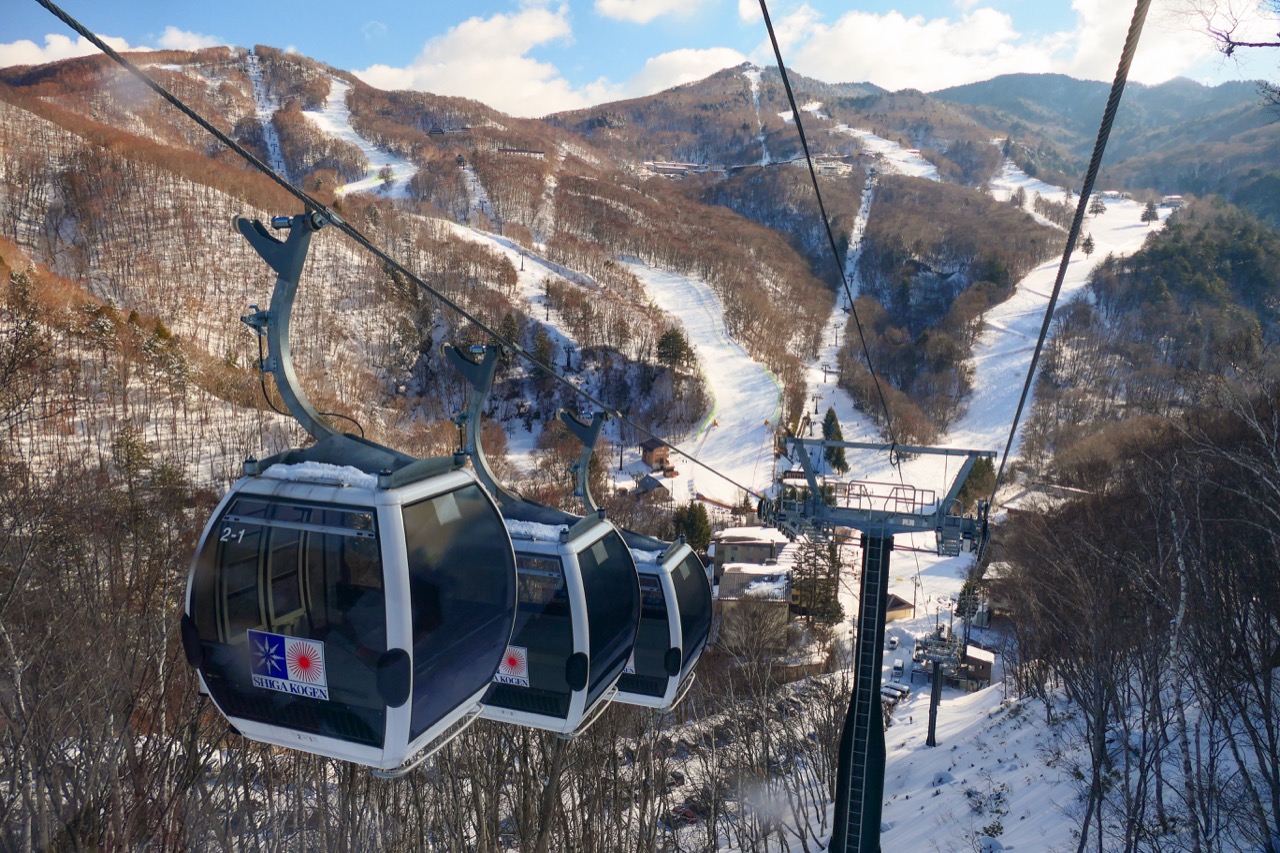
Checked on 29 October 2026. Recheck transport timetables, fares and operating dates with the official operator before booking. Where a previous-season timetable is used, the article labels it as a reference only. Snow and lift conditions can change. Courier guidance is not a confirmed route delivery time. Photographs show the destination, not current snow conditions.